Diabetics can travel by road, rail, or air while keeping glucose stable and avoiding emergencies by following the protocol explained below.
Key travel preparation tips:
 Plan travel dates, modes of transport, and daily schedule in advance, then fit food, exercise, and medication around that plan so there are no long gaps without proper meals or movement.
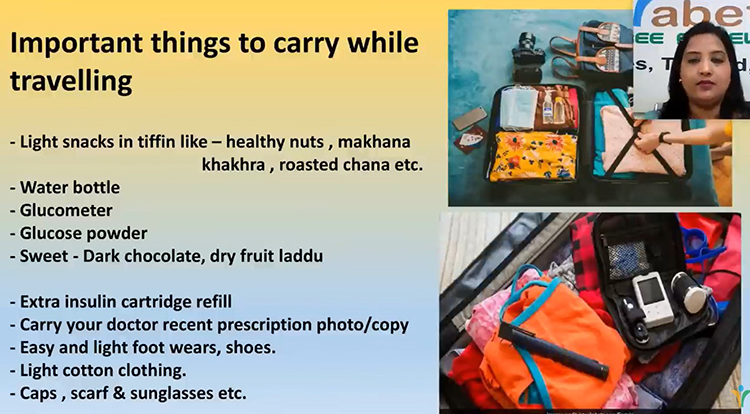
Carry a “diabetes travel kit” with medicines, glucometer, strips, healthy snacks, water, easy and light footwear/shoes, light cotton clothing, caps, scarf and sunglasses, and a doctor’s prescription or summary in case of emergencies.
Food Choices during travel:
Emphasis is on avoiding refined carbohydrates, sugary snacks, juices, and typical fried “time-pass” foods available at stations, airports, or dhaba as
Recommended options include home-packed meals with vegetables, protein, and controlled whole grains, or safer restaurant choices like salads, simple dals, vegetables, and limited rotis instead of rice-heavy or dessert-heavy meals.
Prefer dal/besan based food items.
Wherever possible, drink coconut water. Avoid aeriated drinks, fruit juices and sweet drinks.
Keep hydrated by drinking water at regular intervals.
Avoid two grains at a time viz., chapati/roti and rice. Consume a single grain. If avoiding white rice is not at all possible, mix vegetables with the rice and eat but keep the quantity of rice low and increase the quantity of vegetables and salad.
Carry nuts and seeds, makhana, khakra, roasted chana etc. for consumption at intervals where no other food item is available during travel.
Carry fruits to destinations where fruits are not easily available.
Breakfast Options :
Start with one or two fruits in the morning.
Select dal/besan based food items like Besan Chilla, Tomato omlete, mix dal thalepeth for breakfast.
Where South Indian food items are available, prefer medu vada sambhar, mix dal vada (take more proportion of chutney and sambhar and ensure that sambhar is not sweet with sugar). Avoid white rice idli, rava idli, dosa, uttappa, poha and Upma.
Where North Indian food items are available, prefer chole with lots of vegetables (no bhature), Moong dal chilla, Dhokla, and stuff paratha (stuffed with vegetables and not potato).
Other breakfast options :
Pav bhaji with brown bread or wheat bread and lots of salad
Misal with lots of gravy, matki and shev
Harabhara Kabab
Onion Pakoda, Mix Veg Pakoda, Veg Cutlet, Veg Crispy, Tandoori Gobi, Mushroom Tikka, Mashroom Crispy.
Meal Options - Lunch and Dinner :
Maharashtrian meal :
Veg Kolhapuri, Akka Masoor, Bhakri
Punjabi meal :
Sabji :– mix veg handi, chole masala (not bhature), Veg Bhuna,Veg Kheema, Veg Kadai, Masala Bhendi, Baingan Masala, Rajma Masala, Kofta curry, Masala Kofta.
Rotis : - Wheat roti without butter, Missi Roti
Dal Items :- Dal fry, Dal Tadka
Chinese Snacks :
Veg Manchurian dry
Gobi Manchurian
Chinese Meal :
Stir fried vegetables / beans sprout
Fried Rice
Veg Manchurian with gravy
Hakka Noodles made out of wheat
Chinese Bhel
Rice Options :
Prefer brown rice where available
Dal Kichdi
Jeera Rice
Veg Pulav
Fried Rice.
While consuming rice ensure that it is mixed with vegetables to provide fiber into the meal.
Non-Veg Food Items :
Chiken curry
Fish curry
Avoid fried items.
Continental Food :
Herbal Rice
Veg Barbeque (avoid white sauce)
Grilled vegetables
Beverages :
Fresh lime water with salt
Sol Khadi (coconut milk)
Kairi Panha (during summer)
Iced tea (without sugar)
Jaljira
Subja lemon water
Ginger water
Almond milk cold coffee (if available – without sugar)
Routine, exercise, and monitoring:
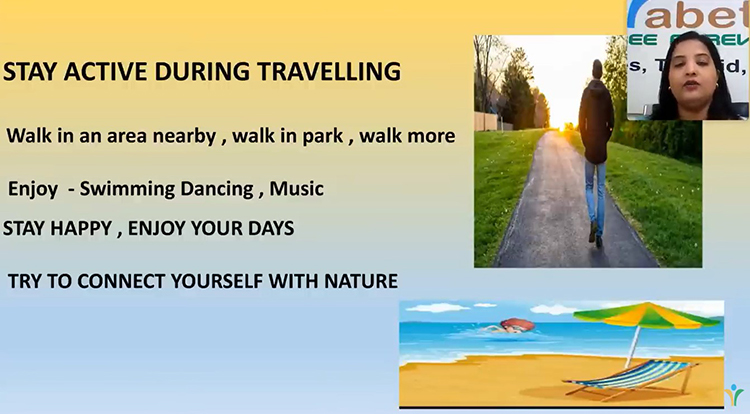
Maintain regular meal timing as far as possible. Otherwise, hypoglycemic is possible if food is delayed or skipped. Always prefer to take your meals before you step out for any delayed activity. Do light activity such as walking, stretching, or simple in-place exercises during long journeys, and avoid prolonged sitting.
Frequent self-monitoring of blood sugar is recommended before and during travel days so that dose adjustments and food choices can be made early rather than after a problem appears.
Summary:
The core message is that travel is absolutely possible for people with diabetes, but it must be “protocol-based”: advance planning, disciplined food choices, movement, hydration, and regular monitoring.
By treating trips as part of the lifestyle program rather than an “off day,” patients can enjoy holidays and journeys without losing control of their health goals.
OTHER IMPORTANT INSTRUCTIONS:
For more details refer to YouTube video of Dr.Shital Kumbhar dated 28.4.2023
